 Innovation Is Transforming Nuclear Decommissioning
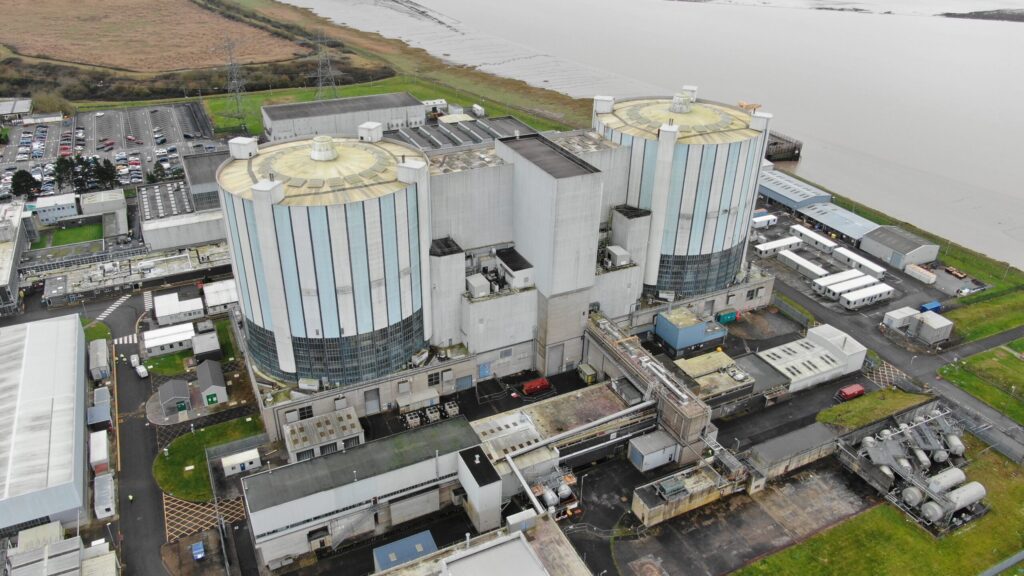
New robotic technologies are being tested at the Nuclear Restoration Services (NRS) Oldbury site in South Gloucestershire, marking an important step forward in how legacy nuclear waste can be managed more safely and efficiently. The trials demonstrate how advanced automation, remote operation and artificial intelligence are beginning to reshape some of the most challenging tasks in nuclear decommissioning.
Two complementary projects are currently underway, each targeting different stages of Oldbury’s waste‑handling process. The first focuses on improving the recovery and sorting of fuel element debris (FED) the metallic material that once held fuel before it was sent to Sellafield for reprocessing. Although the debris has been safely stored for years, it must now be retrieved and separated as part of Oldbury’s long‑term clean‑up programme.
Traditionally, FED handling requires operators to work in restrictive protective equipment and manipulate long mechanical tools from behind shielding. To reduce risk and improve precision, NRS and the Robotics and Artificial Intelligence Collaboration (RAICo) are trialling teleoperated robotic arms that allow operators to carry out the same tasks from a safe distance. Enhanced 3D visualisation and haptic feedback give operators a realistic sense of touch and resistance, enabling far more accurate manipulation of debris while keeping people out of hazardous environments.
Alongside this, NRS is progressing Auto‑SAS, a long‑term autonomous waste‑sorting platform designed to identify, categorise and segregate mixed radioactive waste. Backed by a £9.5 million Nuclear Decommissioning Authority investment, the system combines robotics, 3D scanning and advanced sensing to improve waste classification and reduce the volume of material sent to higher‑cost disposal routes. The technology, delivered by ARCTEC, is expected to begin on‑site commissioning in 2027 and could save the NDA group hundreds of millions of pounds over its lifetime.
Together, these projects show how robotics and AI can enhance safety, reduce manual handling and open up new possibilities for remote and autonomous operations. As RAICo engineer Varun Kumar notes, these technologies could allow skilled operators to work effectively from a safe distance — and even enable people who cannot work in restrictive environments to contribute to complex decommissioning tasks.
For the South West, the trials highlight the region’s growing role in nuclear innovation and the practical benefits emerging from collaborative R&D across the sector.