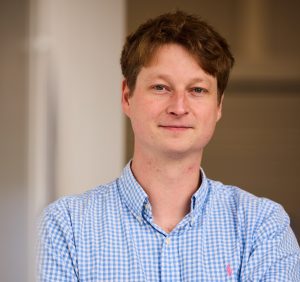
Astral Systems is advancing innovation in nuclear medicine and fusion technology, with a growing team based in the South West. In this Q&A, we speak with Tom Haywood, Director of Market Development – Nuclear Medicine at Astral Systems, who leads the strategy and execution of bringing new radiopharmaceuticals to the global market. He shares his perspective on how the South West is shaping nuclear innovation and healthcare delivery, why the region is an ideal base for deep‑tech ventures, and how Astral’s work is creating opportunities for collaboration, growth, and impact across both the local economy and the wider UK nuclear capability.
How do you see the South West playing a role in advancing nuclear innovation and healthcare delivery?
Since the birth of Nuclear in the UK, the South West has played a strong role in its development. From the early construction of Magnox reactors at Berkeley, Hinkley Point A and Oldbury. Nuclear research labs at Winfrith and Berkeley. Through to the current construction of Hinkley Point C. This development has been supported by a strong technological and industrial network in the South West, despite its stereotype of rural farmland. Continued investment in nuclear education in the South West including Taunton & Bridgwater College and University of Bristol is key to maintaining and building the vital knowledge for the sector to advance. Large infrastructure projects such as Hinkley Point C create a local ecosystem of companies, knowledge and funding to further build on the advancement of nuclear innovation in the region. The reimagining of the Berkeley site by Chiltern Vital Group, turning it into a new nuclear technology and science park will undoubtedly boost nuclear innovation in the region, already attracting a number of innovative nuclear companies. This rich nuclear legacy and vibrant future is an important reason that Astral was founded in the South West. With good infrastructure and experienced staff. Astral is excited to be a part of this rich South West Legacy.
Why is it important that developments like Astral’s are happening here, in this region?
The South West is a fantastic region for deep tech start ups such as Astral to be located. The South West is well connected by transport links to London, The Midlands and further North. While there is an ongoing boom in biotech startups in London and in areas around Oxford and Cambridge, space is limited with both high commercial and residential costs. The South West has a fantastic network of start-ups to support growth from inception to larger organisations. It is important that deep tech start-ups such as Astral as well as other industries are supported in the region as they create high value jobs, grow the local economy and can support the growth of other local businesses.
What opportunities does Astral’s work create for collaboration with South West suppliers, universities, and research centres?
Astral’s work in development of compact fusion devices for medical radionuclide supply helps create a broad supply chain from precision engineered components, lab equipment, engineering equipment, office supplies amongst other things. Astral thrives to source as much of these from local suppliers from the South West and the Bristol area, we have found that using local suppliers facilitates relationships due to easier face to face meetings, faster turnaround of orders and better relationships in all.
Astral have a close working relationship with University of Bristol with a number of research contracts and shared projects with them. Several Astral staff are also University of Bristol Alumni.
Perhaps most importantly, Astral contribution to the local economy is the creation of high value Jobs in the South West in a range of disciplines from engineering, chemistry, physics, project managers and administrative staff. Astral has grown to 24 members since Early 2024 with plans to grow to around 50 staff by the end of 2026, creating more high value jobs.
How do you see this project contributing to the UK’s wider nuclear capability and regional growth?
More research and development in all areas of nuclear is a benefit to both national and regional growth. While the UK has a strong fusion research sector, most of this is located around the Oxford/Abingdon area. To our knowledge, there are no other fusion companies based in the South West. As Astral is a fusion company with a focus on radionuclide production and neutron output, we are able to support the fusion, fission and other industries with a broad range of neutron irradiation applications for several industries like aerospace, defence and electronics.
What excites you most about the next 5–10 years for nuclear medicine and fusion technology?
Nuclear medicine has experience a huge boom globally in the last 10 years, with the approval of several targeted radiotherapy pharmaceuticals and over a hundred more in clinical trials. Further approval of radiopharmaceuticals will mean an increase in demand for the radionuclides they use. Development of fusion technology unlocks new methods and for producing in demand medical radionuclides as well as opening up novel radionuclides for nuclear medicine which have not previously been viable through traditional production methods.
How do you see Astral Systems shaping the conversation around clean energy and healthcare innovation simultaneously?
Astral are hoping to make a true impact on healthcare in the short to medium term and energy in the longer term. Astral’s ambition is to be delivering therapeutic and critical diagnostic medical radionuclides within the UK in the next 2-3 years. Longer term ambitions in the energy sector include using our fusion technology for spent fuel analysis to determine isotopic composition also developing a fission fusion hybrid system to help realise the potential of fusion energy long before pure fusion power is plugged into the grid.
What message would you give to young engineers or scientists in the South West considering careers in nuclear medicine?
It is a fantastic time for young scientists and engineers to join the nuclear medicine field. Both civil and medical nuclear sectors are going though a renaissance currently, with both fields hiring for new young talent.
What skills and expertise will be most in demand as projects like this scale up?
The field needs a wide range of expertise in the STEM fields and more broadly beyond that. Both university graduates and post graduate students will be required for the expanding fields. Mathematicians, physicists, chemists, biologists, medicinal chemists, chemical engineers, process engineers and mechanical engineers to name a few. In additions several trades and technologist career will be high demand to fuel this renaissance towards their execution and to the desired outcomes.